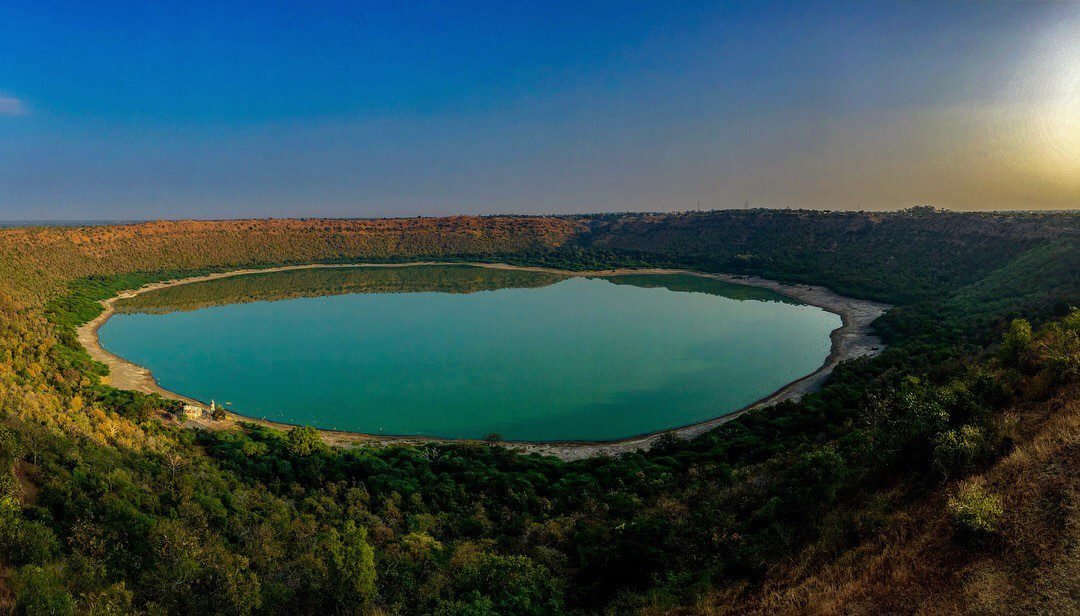
Lonar Crater Lake is one of the most remarkable natural formations in India, created thousands of years ago by a meteor impact. The result is a massive circular lake surrounded by thick forest, rocky ridges, and a unique ecosystem that scientists and nature lovers find fascinating. The lake has both saline and alkaline properties, making it one of the very few crater lakes of its kind in the world.
Walking around the lake feels like stepping into another world. The lush green slopes contrast beautifully with the still blue water, and birds like herons, egrets, and migratory species often gather near the shoreline. Ancient temples around the crater add a historical and spiritual layer to the landscape, with carvings and stone structures that have stood for centuries.
Lonar is perfect for hikers, photographers, spiritual travelers, and anyone curious about geology. The mix of natural beauty, scientific intrigue, and ancient traditions creates a rare and memorable experience.
How to Reach
Lonar is around one hundred and fifty kilometers from Aurangabad by road.
Taxis and local buses provide easy access.
Best Time to Visit
October to March for pleasant weather and good visibility.
Popular Attractions Nearby
– Lonar Wildlife Sanctuary
– Daitya Sudan temple
– Crater trek
– Gomukh temple
Travel Tips
– Wear sturdy shoes for the crater walk
– Carry water and snacks
– Avoid visiting in peak afternoon heat
– Hire a guide for geology insights
Suggested Itinerary
Day 1: Visit crater viewpoint, walk the rim, explore temples
Day 2: Crater descent, nature walk, wildlife spotting
FAQs
Is the crater difficult to trek
Moderate, suitable for beginners with breaks.
Is this lake really formed by a meteor
Yes, confirmed by scientific studies.
Are there hotels nearby
Basic guesthouses and small lodges.
Can I go around the entire lake
Yes, the trail circles the crater.
Is it good for birdwatching
Yes, many species visit the lake area.